• Fire Outbreaks in Kibera

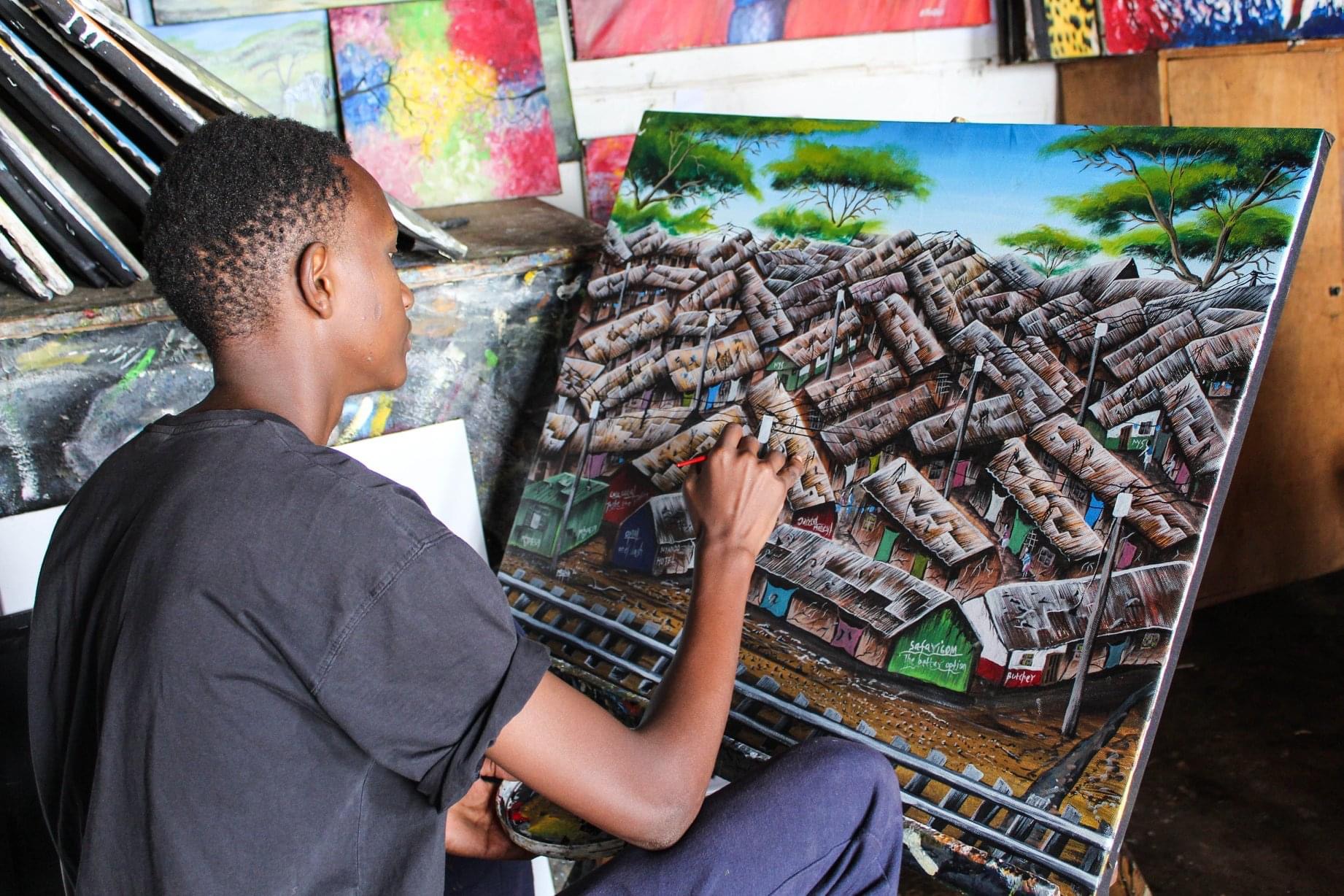
    During last week's session, Journalism Club members were asked to write about fire tragedies in Kibera. This is because fire outbreaks have been reported more often in the past few weeks. 


    Photo via Peter Ombedha http://peterombedha.wordpress.com
     
    FIRE IN KIBERA by Victor Nyongesa
     
    Fire is among the major problems that people from this slum, Kibera, face. Since the introduction of electricity in Kibera, a month cannot go by without a fire outbreak being reported.  Laini Saba is the area that reported the latest fire on Saturday, May 11 at around noon. 

    It is a fire that burned seventy two houses and several people were injured.Some people, instead  of helping others to save their things from fire, started stealing people's property.  It is not easy to put out the fires that break out every now and then because of lack of water in the slums.  Also, when the fire fighters come, they are in most cases not able to help because there are no roads in most ares of Kibera.


    Victor Nyongesa
     
    THE FIRE TRAGEDY by Doron Omondi
     
    Many families lost their homes and properties after a fierce fire raged down their houses in Laini Saba, Kibera on Saturday,11th May.   About seventy two houses were burned down, property of unknown value destroyed and some people were also injured during the incident. Another break-out was reported in 42 area of Kibera a few days earlier, where four houses were completely burned including everything that was inside of them.   The main reason why the fires spread very fast in the slum is because the houses are built next to each other at a very close distance and some of them don't even have ventilation.
     
    The case of fire outbreaks is common in Kibera. Some of the causes of the fire are poor connection of electricity and stoves that are left unattended to.  The government is trying to reduce the cases by establishing fire brigades but the roads leading to the affected areas are in most cases impassable, thus making it difficult for fire fighters to arrive in time.  The locals should therefore always attend to their stoves, manage their electrical wires and discourage anything that can lead to fire outbreak.


    Doron Omondi


    Related posts:

  • Journalism Club Members Write About Uweza

    At their last meeting, members of the Journalism Club were tasked with writing stories about Uweza and told that the best two would be published online on our blog.  Below are the two chosen stories:

    UWEZA FOUNDATION by Doron Omondi

    It was started in the year 2008 as a soccer and sponsorship programme but later many other activities were introduced. The newly introduced activities include Art class, Journalism club, Cultural troupe, Golden Girls Power and tuition programmes.  Uweza was registered as an NGO in 2010 and is located along Karanja Road opposite St. Mary's Hospital.

    The Managing Director is Jen Sapitro and the Country Director is Mr. William Moi.  The main aim of Uweza Foundation is to create and nurture talents in Kenya and especially in the Kibera slum.  In soccer, there are various categories namely under 8 years, under 10 years, under 12 years, under 14 years, under 16 years and senior. Boys are in almost all categories but there are also girls categories.

    In art class, those with passion learn how to make good art work and painting. In fact, there are so many paintings on the walls within the Uweza center rooms, which have been done by the art class students.  In Journalism club, which I also belong to, we are taught basic journalism skills, responsible journalism and photography too. We also get to write articles of which the best are posted on Uweza blog.

    Traditional dances and songs are promoted in the dancing troupe.  Speak It Out is an interesting programme for the youths aged from 12 years-old. Here, we get to share life experiences, are taught what life is about, about relationships and what to expect in life. We're also taught on good behaviour.

    Golden Girls Power is a club in which girls learn about life skills and also how to make jewelry. The jewelry is sold; hence it is an income generating exercise.  In tuition, primary and secondary school goers are given an extra hand in learning and revision. They are also helped to do their homework. This is because some of them can't afford to have electricity in their homes for doing revision of what they have been taught in school.

    So far Uweza is a good initiative. This is because many children get to realize and nurture their talents at Uweza and they look forward to what they will become in the future.               


    Doron Omondi

    JOURNALISM CLUB by Sharon Akinyi

    Uweza Foundation is an organisation that gives young people a chance to develop and nurture their talents. The main aim of this organisation is to nurture talents in the Kibera slums. There are many programmes that are run by Uweza Foundation such as Art and Craft, dancing club commonly refered to as Uweza Cultural Troupe and Journalism, just to mention a few.

    Journalism club was started in February 2012. It has since been growing with young individuals who are interested in media. It is a club that prepares youth how to become good and responsible journalists. It started with teacher Thomas Bwire, who led the group up to March 2013. This group attends many forums and enjoyable places like Ngong Hills.

    We have so far visited two media houses, KBC and Citizen TV, and have been able to meet professionals like Johnstone Mwakazi of Citizen TV. It was an enjoyable and educative tour as we were taught many things that were aimed at helping us in our lives as journalists.

    In journalism club, we are taught how to write stories observing the 5W's and H. We are also taught on how to take good photographs. We have our own blog where we write stories and post them there.  Every event that takes place at Uweza is written and photographs are posted, this way we are able to share with the rest of the world. This therefore means that it is in Journalism Club that you will get the best writers and photographers.

    When we meet on Sunday afternoon, we read and review newspapers, discuss the happenings of the past week and latest news too.  Right now we have teacher Mercy Alomba, and she is a good and friendly teacher. I believe that this club will produce fruitful people that will go an extra mile in informing the society.

    Related posts:

  • Support Uweza in the RaiseForWomen Challenge and we will send you a beaded bracelet!

    Uweza is currently participating in the RaiseForWomen Challenge on Crowdrise, which is designed to help female-focused causes gain recognition and resources.  The three charity organizations that are able to raise the most money win donations of $40,000, $20,000 and $15,000 from the Skoll Foundation.  Charities must receive donations from 100 unique donors to qualify to win the challenge.

    After spending the first few weeks of the challenge in the top three positions, we have dropped to seventh place.  We are reaching out to our supporters to donate anything they can to support our programs for girls that include:

    • Scholarships (including school fees, books, and school uniforms) for girls in primary, secondary & technical schools
    • Establishment of a "safe house" for girls seeking refuge from dangerous home situations
    • Life skills training (topics include reproductive health, self-defense, and choosing a career) in our Girls' Empowerment Club
    • Activities that build skills and self-esteem including a girls soccer team, art classes, a journalism club, and a dance group at our Community Center

    From now until the end of the challenge on June 6, we will be sending a beaded spiral bracelet made by the members of our girls' empowerment club as a thank you to everyone who donates.


    HOW TO DONATE: Please visit http://www.crowdrise.com/UwezaGirls to make a donation and then email us at info@uwezakenya.org with your mailing address.  Thanks in advance for your support of Uweza and girls in Kibera!


    Related posts:

  • Speak it Out: Relationships

    Our "Speak it Out" program brings together the adolescents ages 14 and up from all of our programs every month to discuss issues that affect their daily lives.  Guest speakers have facilitated discussions about topics including choosing a career, maintaining peace in the community, and healing from trauma.

    Last Monday 29th April, 66 Kibera youth, both boys and girls, gathered at Gifted Hands School in Kibera for this month's Speak it Out.  The topic of the day was relationships and reproductive health and the guest speakers were Constance Okoth and John Kamwanza, proprietor and nurse of St. Mary's clinic, which is located across the street from the Uweza center.


    Although sexual and reproductive health is taught in schools, the curriculum largely focuses on encouraging abstinence as the only option and students may not feel comfortable asking questions. At the same time, a survey of Kibera adolsecents carried out by Population Council found that among unmarried adolescents ages 10 to 19, 31 percent of boys and 24 percent of girls were sexually active.  HIV/AIDS, teenage pregnancy, and sexual violence are realities that Kibera youth must deal with on a daily basis.  Uweza felt that providing youth with information about sex and relationships and directly addressing their quesitons and concerns would enable them to make informed decisions when it comes to their own sexual health. 

    The first topics covered were basic life skills that included critical thinking skills, social skills, and emotional and self management skills. Participating youth were asked to describe challenges that they face as they mature and develop.  Participants mentioned low self-esteem, being old enough to make bad decisions, peer pressure, parents that were too busy to focus on their children, and poverty as challenges that youth in Kibera face.


    The discussion then moved into relationships and reproductive health.  Constance discussed the male and female reproductive anatomy so that participants were able to fully understand their bodies, how they work, and that they are in control. The speakers also covered the symptoms and transmission of STDs and described how a pregnancy is conceived. Participants were encouraged, if sexually active, to use condoms. A large portion of the session was dedicated to answering youth's questions.  Openness was encouraged and no questions or topics were off-limits.  Because time was limited, future sessions will provide more comprehensive contraception education and youth were encouraged to visit St. Mary's clinic to learn more about contraceptive options, if needed.


    The effect of poverty on youth's sexuality came up several times during the discussion. Many acknowledged that girls and women in Kibera  are sometimes pressured to have sex in order to meet their and their family's financial needs. An example given by one of the participating girls was:

    "In some cases, you will realize that it is the girls who have taken up the burden of providing for their families upkeep. This in most cases is prompted by the father, who is believed to be the sole bread winner, running away from his responsibilities. In the process of the mother trying to provide for her children, she might get infected with HIV virus and in the long run is bed-ridden. The girl will therefore be forced to engage in sex-for-money."

    Recognizing that this is a complex topic that will need continuous follow-up as well as small group sessions to fully meet the need for information on reproductive health for the youth participating in our programs, future sessions are being planned. Participating youth completed an evaluation as well as a survey about their current sexual activity and knowledge of family planning and we will use these as a guide to inform future sessions. Overall, the response of participating youth was very positive and almost everyone reported learning something useful they did not know before. 


    Related posts:

  • The Power of Sponsorship


    by Mercy Alomba

    It is half past five in the evening but you might think it's early afternoon in one of the rooms at Uweza.You are met by cheerful faces of boys and girls attending a meeting. The meeting is held every last Sunday of the month to enable these special children socialise, play games, share snacks and review their performance in school.

    I call them special because they have a special story to tell. They're among the many needy children from Kibera slums. The children are both special and lucky thanks to Uweza Foundation's sponsorship program that came to their rescue and has given them a chance to have their right to education. 

    Mr. Mathew Muema, the Sponsorship Coordinator shares the sad story of the children in the program. "When you visit some of their homes, you will be shocked at what you see. Most of their parents are jobless and can't even afford to provide them with food. Many of them used to just stay home, despite attaining school going age, due to lack of school fees. Since it is not easy to provide a meal, where would their parent get money for paying school fees?"

    Muema explains further on the issue of free primary education in the country.  "There is no free education system in the country at all. Remember the government does not provide the children with uniform, books and even shoes. This is tricky for those parents without a source of income!" he exclaims.

    In the class sits a happy 13-year old Caroline Okibiego. She is in class six at Raila Educational Centre, a school in Kibera. She begins by thanking Uweza for reviving her dream of going to school by meeting all her school needs.  "Uweza pays all the fees, buys me uniform, shoes and all the stationery which I use in school".


    Caroline Kibiego

    Her words are echoed by 13-year old Brian Kitulu, a class seven pupil at Ayany Primary School. Like Okibiego, Kitulu is grateful for what Uweza is offering him. "I thank Uweza for everything that I get at Uweza as my mother can't always afford our schooling. In fact, Uweza even enables us enjoy our Christmas every end of the year. They give us gifts and food stuff so we can enjoy as a family."


    Brian Kitulu

    Nothing good comes without challenges and Mr. Muema says that despite Uweza providing for the children's school needs, some of them drop in performance due to domestic problems like lack of food. Some of the parents leave all responsibilities and health matters to Uweza. You find that a kid is sick, but the parents don't take her for treatment. It is our responsibility to make sure the sick kid gets treatment by taking them to hospital." He adds that as some of the children develop, they're greatly affected by peer pressure.


    Sponsorship Coordinator Muema Mathew leading students in a game

    Despite the challenges, Muema still holds high hopes for the children. He jovially says that there are lawyers, presidents, doctors, pilots and many more great people among the children present in this room. This is a hope that might come true as Caroline Kibiego wants to be a doctor and Brian Kitulu wishes to become a pilot. Muema also wishes all the sponsors God's blessings in all they do.


    Related posts:

  • Journalism Club Stories of the Week: Food Vendors in Kibera

    This week, members of the Uweza Journalism Club were challenged to write a story about someone who sells food in their neighborhood.  Two stories were selected by Journalism Club instructor Roy as the best and will be posted on the notice board at the Uweza center for everyone to read.  

    "Mama Akinyi"
    by Doron Omondi, age 13

    Deborah Achieng is a kiosk owner who sells a variety of fast foods like mandazi, chapati, bhajia, chips and samosas, among others.  She is commonly known as "Mama Akinyi" and her kiosk is located at Olympic residence.

    She began her business by borrowing money from Jamii Bora bank and she returned it after a duration of four months with interest.  She now earns a profit of 2,000 /= (per day) from her sales.  She started her business because she wanted to pay school fees for her children who are in high schools.  She gives some of her unsold products to her loyal customers and she openly gives her products as a credit to those who can't afford.

    "From a chips seller to a hotelier"
    written by Victor Nyongesa, age 16
    edited by Jenipher G. Awuor, age 17

    Lucy Atieno is a chips seller in Lindi, Kibera.  Her main purpose for starting the business was because her husband could not provide her basic needs.

    She borrowed a loan of KShs 10,000 from the Equity bank and agreed to pay after two months.  "I used to get a profit of one hundred shillings when I started this business," she said.  She saved the profits so as to expand her business.  After a period of five months, she expanded the busines from only selling chips to a hotel and now the profits rose from Shs 100 to Shs 700 per day.

    And with this profit she can provide for her children all their basic needs.  Herself she is better than the way she was earlier.  She also paid the loan on time.


    Victor Nyongesa and Jenipher Awuor


    Related posts:

  • Kibra League Standings – 10th April, 2013

    Under-8 Standings

    No. Teams P W L D GF GA Points
    1 Kibera Mighty Lions  3 1 0 2 2 1 5
    2 Brothers  3 1 1 1 3 3 4
    3 Marren  2 1 1 0 3 3 3
    4 Otada  3 0 0 3 1 1 3
    5 Uweza  3 0 0 3 0 0 3
    6 Kibera Egan  3 0 0 2 0 1 2
    7 GYFF  0 0 0 0 0 0 0


    Under-11 Standings

    No. Teams P W L D GF GA Points
    1 Uweza  3 2 0 1 3 1 7
    2 GYFF  3 2 1 0 3 1 6
    3 Marren  3 1 0 2 2 0 5
    4 Red Planet  2 1 0 1 2 0 4
    5 Brothers  3 1 1 1 1 1 4
    6 Kibera Egan  3 1 1 1 1 1 4
    7 Tiger Stars  3 1 1 1 1 2 4
    8 Christ Ambassadors 1 0 0 1 1 1 1
    9 Caro Foundation 3 0 2 1 0 3 1
    10 Kibera Mighty Lions  3 0 2 1 0 3 1
    11 KIMMTA  3 0 3 0 0 5 0
    12 Magic 90  0 0 0 0 0 0 0


    Under-13 Standings

    No. Teams P W L D GF GA Points
    1 Kibera Egan  3 3 0 0 4 1 9
    2 GYFF  3 1 0 2 3 1 5
    3 Caro Foundation 3 1 1 1 3 2 4
    4 Christ Ambassadors 2 1 0 1 2 0 4
    5 KIMMTA  3 1 1 1 2 3 4
    6 Marren  3 1 2 0 2 4 3
    7 Uweza  3 0 1 2 0 1 2
    8 Brothers  3 0 2 1 3 5 1
    9 Red Planet 1 0 1 0 0 2 0


    Kibra League is a youth soccer league aimed at uniting Kibera teams, players and coaches, keeping youth busy in a productive and safe activity, and building soccer talent in the slum.  The league is a joint initiative of Amani Kibera and Uweza Foundation.


    Related posts:

  • Why is it important to educate girls?

    This year, we have been overwhelmed with applications for our sponsorship program.  Education is extremely important to Kibera children and families and many know that it is a key component in improving future livelihoods and escaping the cycle of poverty that prevails in the slum. We have posted an appeal for support for our sponsorship program on the front page of our website to enable us to keep Kibera children in school are are continuing to reach out to anyone who might be able to help us support more students. 

    We especially want to focus this year on supporting the education of Kibera girls.  There are many known statistics and facts on the importance of educating girls but today, we decided to ask the girls themselves.

    Here are why some of the high school girls who study daily at Uweza's center think it is important to educate girls:

    It is important to educate girls because…

    "…girls in the future build up the society, i.e. if you educate a girl, you educate the whole community.  Education enables girls to live in the competitive world.  Us girls face a lot of challenges such as neglect and many girls are forced to become house helpers."

    - Chebet, age 16, Form 3 student at Raila Educational Centre

    "…they are the ones who help their parents a lot.  It is also important so that they can be respected in the society."
    - Leah, age 16, Form 2 student at New Adventure High School

    "…after the girls have finished school and found a job, they are able to help the society and make their family to be happy."
    - Lorna, age 16, Form 1 student at Raila Educational Centre

    "…most of them face difficult challenges that happen through their lives as girls.  The education nurtures them and it helps them to express themselves because many of them are afraid of expressing themselves openly.  After being educated, they may have courage to weigh what is right in their lives and what is wrong."
    - Lilian, age 17, Form 4 student at Raila Educational Centre 

    "…education is able to make them to learn how to manage their weaknesses as a girl in their environment."
    - Cecilia, age 18, Form 4 student at Raila Educational Centre

    "…girls are the backbone of society and they play a very important role in the community.  As the saying goes, behind every successful man there is a woman.  When you educate a girl, she will never forget where she comes from and will always try her best to endure all the pain and challenges that may come her way.  As the saying goes, when you educate a girl, you educate the whole nation."
    - Serahz Sirama, age 17, Form 3 student at Raila Educational Centre


    To support girls education in Kibera, either through sponsorship or through a one-time donation, visit http://www.uwezakenya.org/our-work/sponsorship.


    Related posts:

  • Uweza Cultural Troupe Learns the Gumboot Dance


    story by Lilian Mariachana
    photos by Lilian Adhiambo

    Normally, the Uweza Cultural Troupe goes for training every Sunday afternoons at a school in the Kibera slum.  Since last year, the members have been trained to learn songs and dances from many Kenyan tribes and even other countries.  Their teacher, Antony Juma, was there to provide support and make sure they learned the steps of the dance correctly and Uweza tutor Harriet was there to play the drums and help teach.


    Dance rehearsal

    This was the group's first rehearsal after the Kenyan election.  In the weeks before the election, the Uweza Cultural Troupe organized performances for peace throughout Kibera.   The most exciting part of today's rehearsal was that the group was learning a new dance with new costumes of gumboots and overalls.  


    Trying on the new costumes

    According to Uweza Cultural Troupe Instructor Antony, the dance originates in mining communities in South Africa, who have used the dance to celebrate when they find gold.  In Kenya, it can also represent hunters who have brought meat to their families. He thought to introduce this dance into Uweza's activities to provide a creative way for Uweza youth to give back to the community.  Wearing these costumes, they will venture out into the slum to participate in clean ups and other environmental activities.  At the end of the activities, they will perform to entertain and engage community members.  The response from the participating dancers was that they were very happy to receive new costumes and are excited to become experts in a creative new dance. 


    Antony Juma demonstrates the new steps to Uweza dancers


    The author and photographer of this story are members of the Uweza Journalism Club.

    Related posts: